


The Voyage of the Vikings—The Solar Eclipse: Part I


I returned from a 35-day cruise, the Voyage of the Vikings, covering seven countries to see the solar eclipse west of Iceland; unfortunately, it was cloudy. But all was not lost, the voyage led us to visit many places.
We sailed from Boston to Maine, then to Newfoundland where we visited Gros Morne National Park and supposedly we were to see the "top of the bottom of the Earth." —orange rocks from the middle layer of planet Earth pushed upwards where continental plates collided almost half a billion years ago. This barren landscape is one of the best examples of the Earth's mantle exposed essentially in its naked state.


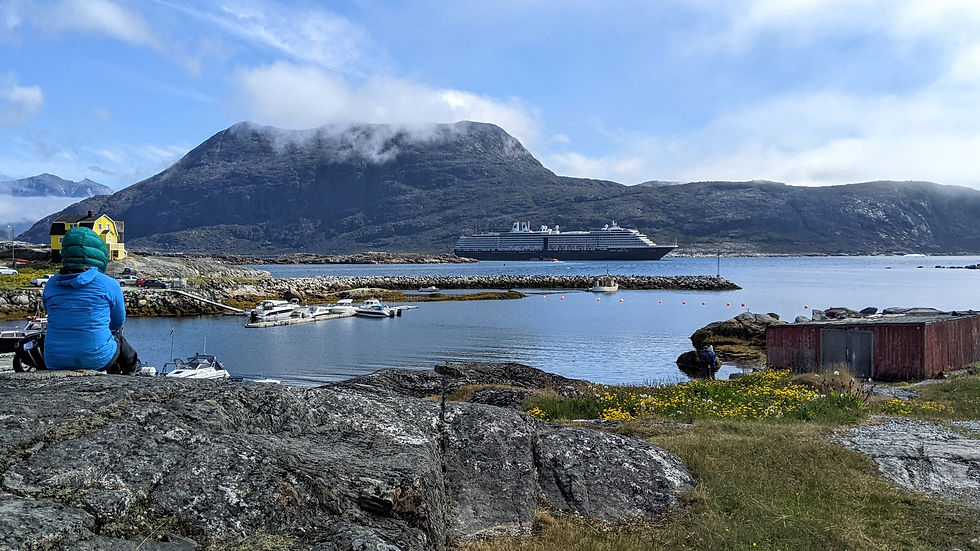
In South Greenland, we visited Paamiut and Nanortalik, small, quaint communities, and passed many glaciers in Prince Christian Sound, where Holland America dropped off many tons of food- fresh fruits, vegetables, freshly baked pizzas, and soft drinks to an isolated village of about 400 inhabitants — a regular visit when it passes through this region—a very touching goodwill gesture.


In Eidfjord, Norway, we drove through the spectacular and steep Måbødalen Valley to the vast Hardanger Mountain Plateau — the largest mountain plateau in Northern Europe. It is also part of Norway's largest National Park. The Vøringsfossen Waterfall cascaded almost 600 feet into the wild Måbødalen Valley below. The weather did not cooperate; it was quite foggy.


We spent almost two days in Rotterdam where I went to the Haag, the Peace Palace was closed, but not the Madurodum miniature Park, and the Museum Panorama Mesdag. I saw Vermeer’s The Girl with the Pearl Earring and Rembrandt’s The Anatomy Lesson of Dr. Nicolaes Tulp at the Mauritshuis Museum. In the afternoon, I visited the Royal Delft Museum before taking the metro to Rotterdam to stroll around the city and check out the Kijk-Kubus, an upside-down house.


The next day, a morning visit to Kinderdijk, a series of historical windmills, followed by the Pilgrim Fathers' Church (Pelgrimvaderskerk) where the pilgrims set sail to America in 1620.

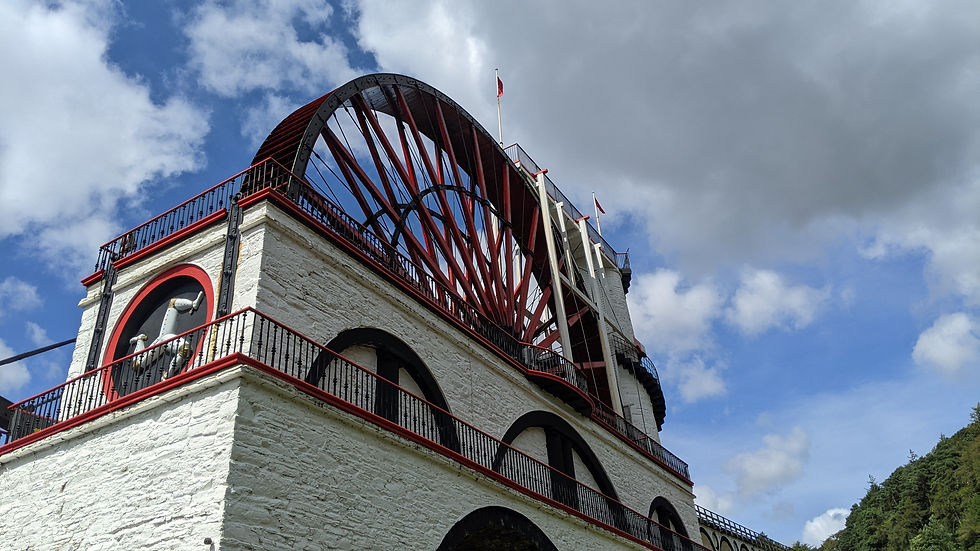
Our next stop was the Isle of Man, the birthplace of the Bee Gees. The Douglas Bay Horse Tramway, running along the promenade in Douglas, celebrates its 150th anniversary and holds the title of the oldest operating horse-drawn passenger tramway in the world. After visiting the Manx Museum, the Bay Horse Tramway connected to the Manx Electric Railway to visit the Laxey Wheel. The historic Snaefell Mountain Railway reached the highest point of the island, the Snaefell; sheep grazing on the slopes. Local folklore says that on a clear day, you can see six or seven kingdoms from the summit: the Isle of Man, England, Ireland, Scotland, Wales, and the kingdoms of heaven and the sea. I did not see the island’s indigenous tailless feline, just this ginger cat with a bow tie and a long tail.




Since I had visited Belfast, Northern Ireland before,I chose to spend the day visiting St. Patrick’s country.

At sea sailing to Iceland.

To be continued…
My fourth book, Finding Independence in America: An International Student's Journey from Malaysia to Medical School, can be preordered at:
It will be out in September/October, 2026

Other books: The Girl Who Taught Herself to Fly paperback, ebooks and audiobooks


What an interesting trip, can’t wait for next installment. I enjoyed ‘The Girl who Taught Herself to Fly.’